



Better aim in Overwatch usually means taking fewer, better shots. Positioning comes first, pre-aiming second and cooldown tracking third, and aim trainers belong in your warm-up, not at the centre of your climb. Mechanics matter, but in a hero shooter they are one input into fight selection, not the fight itself. What follows is opinion, and some of it will disagree with coaches who come from tactical shooters.
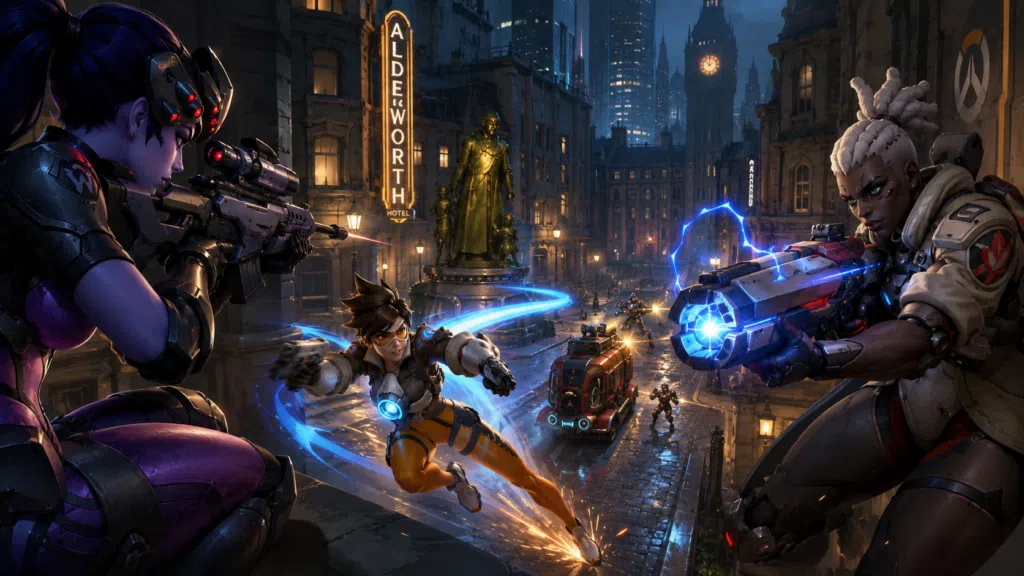
Why mechanics alone stall out
Players coming from CS2 or Valorant often struggle in their first weeks of Overwatch, even with clean mouse control. The reason isn't that their aim got worse. Overwatch removes the constraints those games use to make aim the deciding factor. Head height isn't fixed, movement isn't slowed, duels last longer and abilities can reset a fight in half a second.
Take a strong Cassidy. In an open space he can beat a Tracer on pure tracking. Put him in a doorway where she can blink in, hit and leave, and his aim looks bad. His hands didn't change. He took a duel his aim could never solve. Most missed shots in Overwatch are positioning or timing mistakes dressed up as mechanical ones.
| Tactical FPS | Overwatch |
|---|---|
| Targets at predictable head height | Targets at any height, often several levels at once |
| Movement slowed by accuracy penalties | Abilities boost movement |
| One or two shots decide duels | Sustained damage and healing matter |
| Reaction speed wins | Pattern recognition and pre-aiming win |
Four skills, not one
Tracking
Keeping your crosshair on a moving target. It carries heroes who deal damage over time, like Soldier: 76 or Tracer. The common mistake is chasing: overshooting, dragging back, overshooting again. Smooth tracking sits slightly ahead of the target's movement and lets them run into the crosshair.
Flicking
A fast adjustment to a target, then a shot. Highlight reels show huge 180 degree flicks, but in real games most flicks are a few degrees from a crosshair you already placed well. The flick finishes the motion; it doesn't make up for a poor starting point.
Prediction
Aiming where the target will be. It matters most with projectile heroes like Hanzo, Pharah and Junkrat. It isn't guessing. A low-health support heads for the nearest cover. A Genji mid-dash can't change direction. A Tracer who just recalled is easy to predict for a moment.
Pre-aiming
Placing the crosshair where the enemy will appear before they do. It turns a reaction duel into a pattern you've already solved, and it's the cheapest improvement most players can make.
Movement reading beats reaction time
At higher ranks, a player who read your movement two seconds earlier wins the duel before reactions come into it. Watch how enemies strafe, where they go for cover and which ability they use to leave a fight. Those habits repeat.
Crosshair placement is different here
Because fights happen on several levels, keep your crosshair on the places threats will come from, such as ledges, doorways and ability exits, instead of one standing head height. Threat zones matter more than a fixed height.
Target priority makes your aim look better
Hitting a fully healed tank with a support behind him is a poor use of your trigger time. Shoot the exposed support, the low-health flanker or the target whose cooldowns are spent. The same accuracy produces more kills when it goes to the right target, which is the quickest improvement for many players.
Cooldown tracking feeds that decision. If the enemy Tracer has already recalled, she's vulnerable. If a Genji has no dash, he can be pushed away. Knowing what the enemy has left gives you confidence to commit.
Panic aiming
Under pressure, many players tense up, yank the mouse and abandon their fundamentals. The fix is not more practice at speed. It's taking easier fights, staying behind cover and taking time to reset when a fight goes wrong.
Hitscan versus projectile heroes
Hitscan heroes reward precision and quick decisions. Projectile heroes reward patience and prediction because you're firing at a future position. Switching between them takes recalibration, so don't judge your aim on one hero's results.
How to practise
- Use an aim trainer for ten minutes as a warm-up, not for an hour as a plan.
- Review your deaths and ask whether the duel was worth taking.
- Practise pre-aiming common angles on each map.
- Keep one hero long enough to learn its projectile speed or recoil.
If you want to follow the same thinking on the support side, read our Overwatch support role guide. For the cheat side of the game, the Overwatch cheat page has our product. Overwatch bans are permanent for the account, and no cheat is risk free, so check live status before every session.