



Overwatch support is a fight-control role, not a healing role. Healing is the most visible part of the job and the smallest. Cooldown timing, positioning, denying enemy ultimates, enabling your team's pressure and simply staying alive decide far more fights than raw healing numbers. This isn't a hero guide or a tier list. It's an argument about what the role is for.
Why support gets misunderstood
Teammates notice a support when their own health bar drops. A full bar makes you invisible and a falling bar makes you look bad. They never see the Suzu held back for the right moment, the Sombra you spotted vanish, or the sightline that covered two lanes at once. When a fight goes well, your team thinks it was easy. When it goes badly, it looks like your fault.
That loop creates bad habits. You get blamed for deaths, so you try to prevent every one, so you stare at health bars, so you stop tracking the things that win fights. Your positioning gets worse, and the deaths come anyway.
Why healing stats mislead
High healing numbers can mean your team is taking a lot of damage, not that you are playing well. A support can top the healing chart in a lost game. Judge yourself by whether the team entered fights on good terms and whether your cooldowns changed an outcome.
Enabling matters more than healing
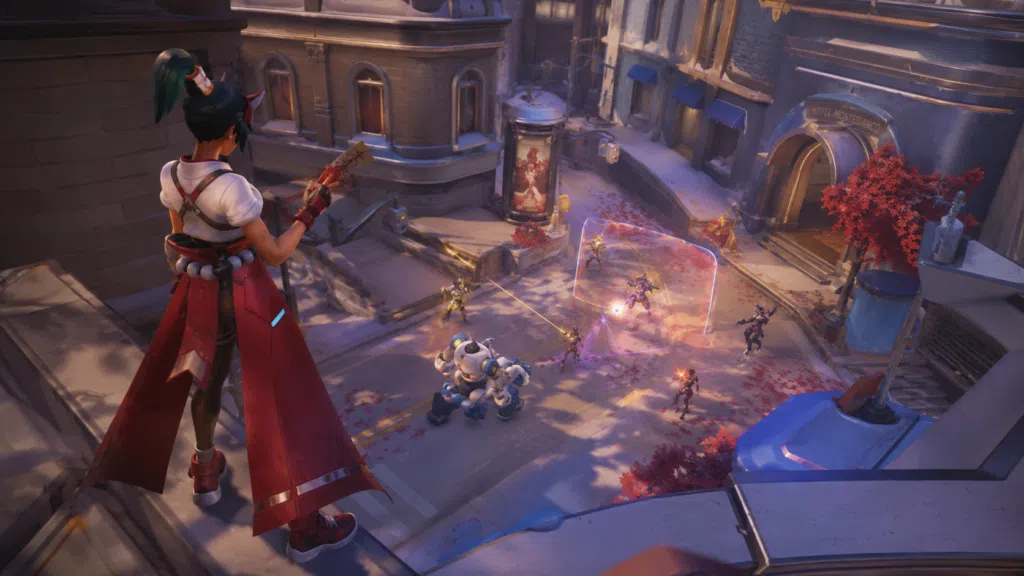
Almost every support has tools that outweigh their healing. Ana's anti-heal grenade can shut a tank's recovery window. Baptiste's Immortality Field works best as a tempo extender during a push, not a panic button. Kiriko's Suzu is a strong rescue tool, so spending it to top off a sliver of health instead of cleansing something dangerous gives the round away.
| Situation | Healing mindset | Enabling mindset |
|---|---|---|
| Tank takes chip damage before an engage | Heal to full right away | Hold cooldowns so they are ready when the fight breaks |
| Enemy dives the backline | Try to out-heal it | Peel, use anti-heal or Suzu, force a wasted dive |
| Both teams poke from cover | Top up every bar | Pressure with damage and bank defensives for the real fight |
Support damage counts as enabling too. A Zenyatta landing two amplified headshots on the enemy tank in the opening duel does more than a lot of passive healing.
Perks changed the early game
Every hero now picks upgrades during the match, so decisions begin before the first heal. Read the enemy composition, the map and the likely length of the fight, then pick for the problem you expect. Treat the choice like a cooldown: spend it on the thing in front of you. Patches shift which options are best, so check the current notes.
Fights are decided before the healing starts
Positioning, setup and the opening cooldown economy settle whether your team enters on good terms. Stand where you see two lanes and can retreat, keep a line to your tank, and keep an escape route for yourself. Surviving beats healing: a dead support heals nothing for the next thirty seconds.
Cooldown discipline
Support cooldowns are the strongest ones in the game. Use them on real bursts, not on the first bit of damage you see. If you spend your rescue ability early, you'll have nothing for the moment that counts.
Reactive versus proactive
A reactive support looks at health bars and responds. A proactive one reads what the enemy is about to do: which ultimate is up, who has a dive cooldown, where a flank can come from. Awareness is the heaviest burden in the role, and it grows as you climb.
Ultimate economy and momentum
Supports track which ultimates are available on both sides. Knowing that, you can time your own ultimate against theirs or deny theirs with a well-timed ability. Winning that exchange often decides the next fight.
How to play with more impact
- Read the fight before you react to it.
- Hold key cooldowns for real burst.
- Add damage when healing isn't urgent.
- Accept that some plays are lost and let them go.
- Stay alive. It's the simplest way to improve.
FAQ
Is support just a healing role?
No. Healing is maintenance. The real work is enabling, peeling and controlling tempo.
Should supports do damage?
Yes, whenever healing isn't urgent. Damage from the support seat multiplies your team's pressure.
Why do supports get blamed so much?
Because the support is the last thing between a teammate and the respawn screen. The blame is often misplaced, since the real mistake usually came earlier.
The same thinking applies to aim, which we cover in the Overwatch aim guide. If you are weighing up our Overwatch product, see the Overwatch cheat page, and look at live status first. Account bans are permanent, and no cheat is risk free.